Course menuHS&E Operatives

Exams / HS&E Operatives / Safety signs and signals

Safety signs and signals questions for the CSCS test

7 free questions on Safety signs and signals, from section C. Safety. Every question is original and explains why each option is right or wrong.

Last verified against HSE guidance and the law ·How we write our questions

Safety signs on site use colour and shape to show what kind of message they give. You need to know them at a glance.

Which sign tells you that you must do something, such as wear a safety helmet?

Choose one answer.

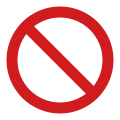
  1. A. Red ring with a diagonal barA white circle with a red ring and a red diagonal bar
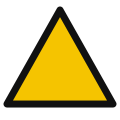
  2. B. Yellow triangle with a black borderA yellow triangle with a black border
  3. C. Blue circleA solid blue circle
  4. D. Green squareA solid green square
Show the answer and explanation

Answer: C

  • A. Wrong: Wrong. A red ring with a bar is a prohibition sign. It tells you that you must not do something, such as smoke.
  • B. Wrong: Wrong. A yellow triangle is a warning sign. It warns you of a danger, but it does not tell you what to do.
  • C. Right: Right. A blue circle is a mandatory sign. It tells you that you must do something, such as wear a safety helmet or eye protection.
  • D. Wrong: Wrong. A green square or rectangle is a safe condition sign. It shows first aid, emergency exits or escape routes.

Explanation

Blue circles say what you must do. Red rings with a bar say what you must not do. Yellow triangles warn of danger. Green squares show first aid and the way out.

Study

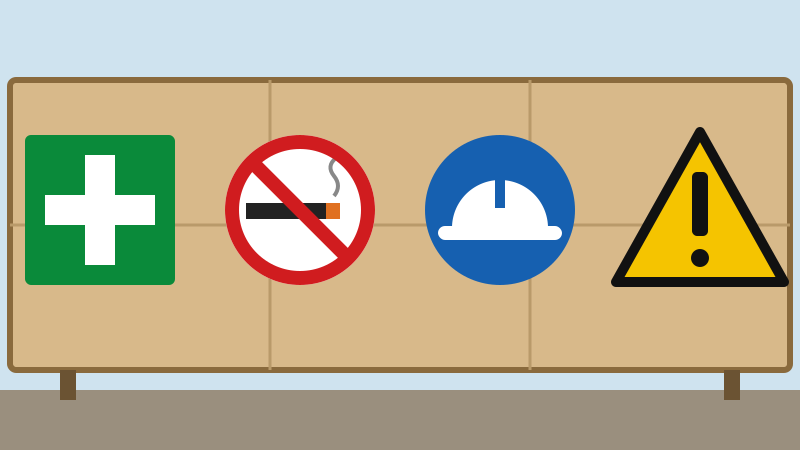
You cut your hand and need to find the first-aid kit. The site hoarding has four signs on it.

Which sign shows where first aid is?

A site hoarding with four safety signs in a row: a green square with a white cross, a red ring with a bar across a cigarette, a blue circle with a white safety helmet, and a yellow triangle with a black exclamation mark.1234

Choose one of the numbered areas on the picture.

Show the answer and explanation

Answer: area 1, the green square with a white cross

  • The green square with a white cross: Right. This is a safe condition sign. Green signs show first aid, emergency exits and escape routes.
  • The red ring with a bar across a cigarette: Wrong. This is a prohibition sign. A red ring with a bar means you must not do something, here smoking.
  • The blue circle with a white safety helmet: Wrong. This is a mandatory sign. A blue circle means you must do something, here wear a safety helmet.
  • The yellow triangle with an exclamation mark: Wrong. This is a warning sign. A yellow triangle warns you of a danger. The exclamation mark means general danger.

Explanation

Green safe condition signs show first aid, emergency exits and escape routes. A white cross on green means first aid.

Study

You are about to walk onto a new part of site. The hoarding at the entrance shows four signs.

Click on the sign that tells you that you must wear a safety helmet.

A site hoarding with four safety signs in a row: a green square with a white cross, a red ring with a bar across a cigarette, a blue circle with a white safety helmet, and a yellow triangle with a black exclamation mark.

Find the right place on the picture. In the practice test you click or tap it.

Show the answer and explanation

Answer: the blue circle with a white safety helmet

  • The green square with a white cross: Wrong. This is a safe condition sign. Green signs show first aid, emergency exits and escape routes.
  • The red ring with a bar across a cigarette: Wrong. This is a prohibition sign. A red ring with a bar means you must not do something, here smoking.
  • The blue circle with a white safety helmet: Right. This is a mandatory sign. A blue circle means you must do something, here wear a safety helmet.
  • The yellow triangle with an exclamation mark: Wrong. This is a warning sign. A yellow triangle warns you of a danger. The exclamation mark means general danger.

Explanation

A blue circle is a mandatory sign: it tells you what you must do. A white safety helmet on blue means you must wear head protection.

Study

Safety signs fall into types, and each type has its own colour and shape. Knowing the type tells you what the sign wants you to do.

Match each sign to its type.

Match each item to one answer. An answer can be used more than once, and some may not be used.

Items

  1. A red ring with a diagonal bar
  2. A yellow triangle with a black border
  3. A blue circle
  4. A green square or rectangle

Answers

  1. A. Warning: take care, there is a danger
  2. B. Safe condition: first aid or the way out
  3. C. Fire-fighting equipment: where it is
  4. D. Prohibition: you must not
  5. E. Mandatory: you must
Show the answer and explanation

Correct matches

  • A red ring with a diagonal bar: D. Prohibition: you must not
  • A yellow triangle with a black border: A. Warning: take care, there is a danger
  • A blue circle: E. Mandatory: you must
  • A green square or rectangle: B. Safe condition: first aid or the way out

About each answer

  • A. Warning signs are yellow (or amber) triangles with a black border, such as a sign for overhead power lines.
  • B. Safe condition signs are green squares or rectangles. They show first aid, emergency exits and escape routes.
  • C. Fire equipment signs are red squares or rectangles, showing where to find things like extinguishers. None of these signs is one.
  • D. Prohibition signs are a red ring with a diagonal bar, such as no smoking or no entry.
  • E. Mandatory signs are blue circles, such as wear a safety helmet or wear eye protection.

Explanation

Red ring and bar: must not. Yellow triangle: warning. Blue circle: must do. Green square: safe condition. Red square: fire-fighting equipment.

Study

In the corridor of a building under construction there is a red square sign with a white fire extinguisher on it.

What does the sign tell you?

Choose one answer.

  1. A. The way out in an emergency
  2. B. Where fire-fighting equipment is kept
  3. C. That you must not use a fire extinguisher here
  4. D. That there is a fire risk and you must take care
Show the answer and explanation

Answer: B

  • A. Wrong: Wrong. Emergency exits and escape routes are shown on green signs.
  • B. Right: Right. Red square or rectangular signs show where fire-fighting equipment is, such as extinguishers and fire alarm call points.
  • C. Wrong: Wrong. A "must not" sign is a red ring with a diagonal bar. A red square shows fire-fighting equipment.
  • D. Wrong: Wrong. A warning sign is a yellow triangle with a black border. This sign shows equipment, not a warning.

Explanation

Red square signs show where fire-fighting equipment is kept. Know where the nearest one is on your part of site.

Study

On the wall at the end of a corridor is a green rectangular sign showing a running figure and an arrow.

What does it show?

Choose one answer.

  1. A. Where the fire extinguishers are
  2. B. The way to an emergency exit
  3. C. That running is not allowed
  4. D. A danger of slipping
Show the answer and explanation

Answer: B

  • A. Wrong: Wrong. Fire-fighting equipment is shown on red signs.
  • B. Right: Right. Green safe condition signs show emergency exits, escape routes and first aid.
  • C. Wrong: Wrong. A "must not" sign is a red ring with a diagonal bar.
  • D. Wrong: Wrong. Warning signs are yellow triangles with a black border.

Explanation

Green signs show safe conditions: emergency exits, escape routes and first aid.

Study

The edge of a low beam that people could walk into has been painted with yellow and black diagonal stripes.

What do the stripes mean?

Choose one answer.

  1. A. You must wear hearing protection here
  2. B. The area has been painted and is still wet
  3. C. An obstacle or hazard: take care
  4. D. This is a fire exit route
Show the answer and explanation

Answer: C

  • A. Wrong: Wrong. A mandatory sign for hearing protection is a blue circle.
  • B. Wrong: Wrong. The stripes are a permanent safety marking, not a wet paint warning.
  • C. Right: Right. Alternating yellow and black (or red and white) stripes are used to mark obstacles and dangerous places, such as where people could bump their heads or fall.
  • D. Wrong: Wrong. Escape routes are shown with green signs.

Explanation

Yellow and black, or red and white, stripes mark obstacles and dangerous places. Take care around them.
Study

Study Safety signs and signals

More C. Safety topics